Tracking Demographic Evolutions and Regional Preferences Across Cross-Border Digital Wagering Platforms
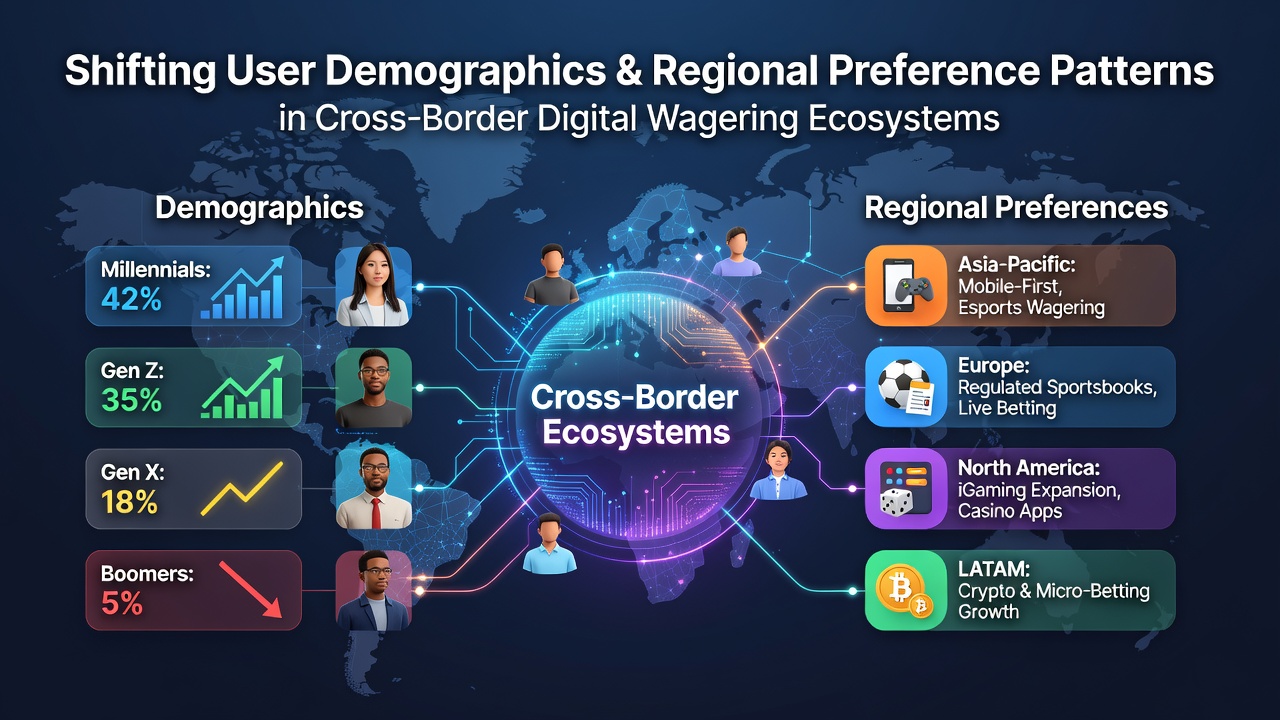
Data from multiple regulatory bodies indicates that user demographics in cross-border digital wagering ecosystems continue to shift toward younger age groups and increased female participation, while regional preferences reveal distinct patterns in game selection and platform engagement. Observers note that these changes have accelerated through 2026, with August figures highlighting sustained growth in mobile-first markets across Asia and Latin America alongside steady adoption rates in established European and North American segments.
Age and Gender Distribution Trends
Industry reports compiled by the European Gaming and Betting Association show that users aged 25 to 34 now represent the largest cohort in many cross-border platforms, accounting for over 40 percent of active accounts in several jurisdictions. This group tends to favor live dealer formats and esports-integrated wagering options, whereas older segments demonstrate higher retention on traditional slot and table game offerings. Researchers have documented a parallel rise in female users, whose share has climbed from roughly 28 percent in 2023 to nearly 35 percent by mid-2026 according to aggregated platform analytics.
Those who've examined registration data across multiple operators find that mobile apps drive much of the new female participation, particularly in markets where instant deposit methods and social features are prominent. Data indicates that these users often start with lower-stake sessions yet maintain longer average play durations compared with male counterparts in the same age brackets.
Regional Preference Patterns by Geography
Preference patterns diverge sharply by region, with sports betting dominating activity in Latin American corridors while casino-style games retain stronger holds in North American and Australian markets. Figures released by the Australian Communications and Media Authority reveal that poker and racing derivatives continue to attract higher average stakes in Oceania, whereas slot titles lead volume in Southeast Asian cross-border flows. Meanwhile, North American users have shown increased interest in prediction-style markets tied to major league events, especially during peak summer months.
One analysis of deposit activity in August 2026 found that Asian markets recorded elevated engagement with live casino streams, coinciding with regional festivals that boost disposable income and leisure time. In contrast, European users displayed steadier patterns around evening hours, favoring structured loyalty programs that reward consistent play across borders. These geographic distinctions underscore how local cultural calendars and regulatory environments shape platform design choices.
Mobile Adoption and Payment Method Shifts
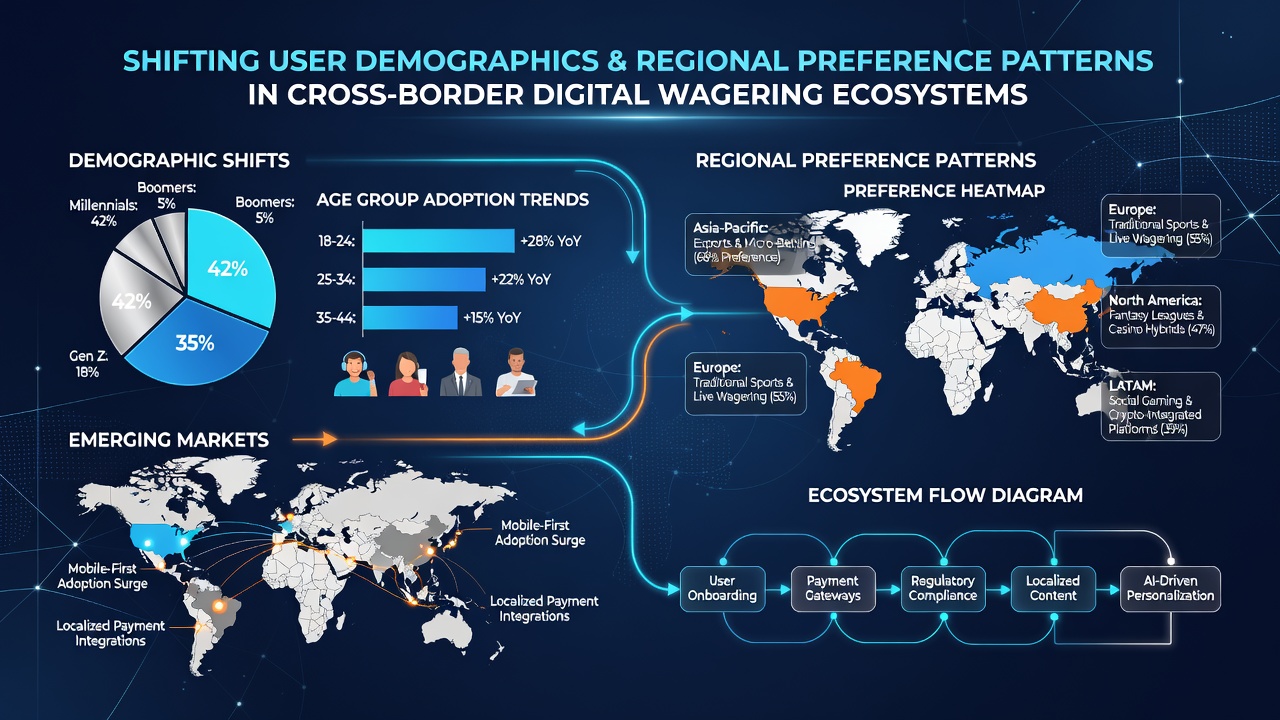
Mobile penetration rates have climbed above 75 percent in most monitored ecosystems, according to research from the Canadian Gaming Association. This shift correlates with the rise of e-wallet and cryptocurrency options that reduce friction for users crossing regulatory boundaries. Observers note that younger demographics adapt fastest to these methods, while older cohorts still rely more heavily on bank transfers and prepaid cards in several territories.
Payment preference data also highlights regional nuances, such as the strong uptake of local digital wallets in Southeast Asia versus the continued dominance of credit cards in parts of Europe and the United States. These patterns influence how operators structure onboarding flows and bonus mechanics to match user expectations in each corridor.
Platform Design Responses to Demographic Data
Operators have adjusted interface elements and content libraries based on the observed demographic and regional signals. Studies from academic research centers indicate that platforms incorporating localized language support and culturally relevant themes see higher conversion from new user segments. For instance, sports-focused interfaces perform better in markets where football and basketball hold cultural weight, while narrative-driven slot experiences gain traction among diverse age groups in Western regions.
Heatmap analytics shared by several major networks confirm that navigation habits differ by demographic, with younger users exploring more menu layers and older users preferring direct access to favorite game categories. These insights guide iterative updates that keep retention metrics stable even as user bases evolve.
Conclusion
Current evidence points to ongoing demographic diversification and regionally distinct preference patterns within cross-border digital wagering ecosystems. Regulatory data and platform analytics together illustrate how age, gender, and location continue to shape engagement behaviors through 2026. These documented shifts provide operators and analysts with measurable benchmarks for adapting services across different markets without relying on speculation.