Regulatory Boundaries Define Feature Sets in Global Mobile Wagering Platforms
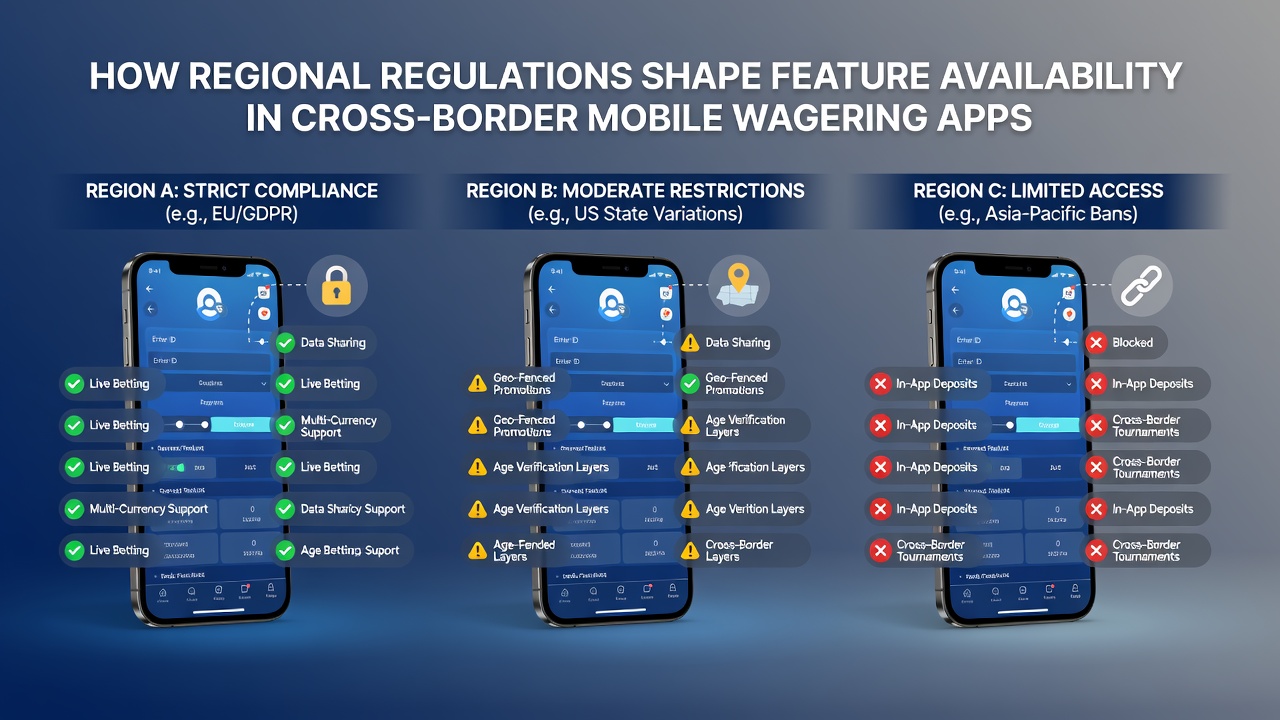
Regional regulations create distinct boundaries for mobile wagering apps that operate across borders, and these rules determine which features users can access depending on their location. Operators must comply with local laws that govern everything from payment processing to game types and bonus structures, which leads to varied experiences for players in different markets. Data from industry reports indicates that such compliance requirements have intensified since early 2025, with new frameworks emerging in multiple jurisdictions by August 2026.
Geographic Limits and Geo-Blocking Mechanisms
Cross-border apps employ geo-blocking technology to restrict access based on user location, and this practice stems directly from licensing conditions set by national or state authorities. In the United States, for instance, states like New Jersey and Pennsylvania enforce strict rules through their respective gaming control boards, which require apps to verify player residency before enabling sports betting or casino-style games. Similar measures appear in Canada where provincial regulators such as the Alcohol and Gaming Commission of Ontario mandate that platforms limit certain live dealer options to within-province users only.
These restrictions extend to promotional features as well, and apps often disable deposit bonuses or loyalty rewards for users detected outside approved zones. Research from the National Council on Problem Gambling shows that such controls help prevent unauthorized participation, while operators face penalties if they fail to implement accurate location checks.
Payment Processing and Withdrawal Rules
Payment methods available in mobile wagering apps shift according to regional banking laws, and this creates inconsistent options for users who travel or reside near borders. European Union directives on financial services influence which e-wallets and card processors apps can integrate, whereas Australian authorities through the Australian Communications and Media Authority oversee restrictions on credit card deposits for online betting activities. In August 2026 several Southeast Asian markets updated their guidelines to require local bank partnerships for all transactions, which reduced the availability of cryptocurrency options in affected apps.
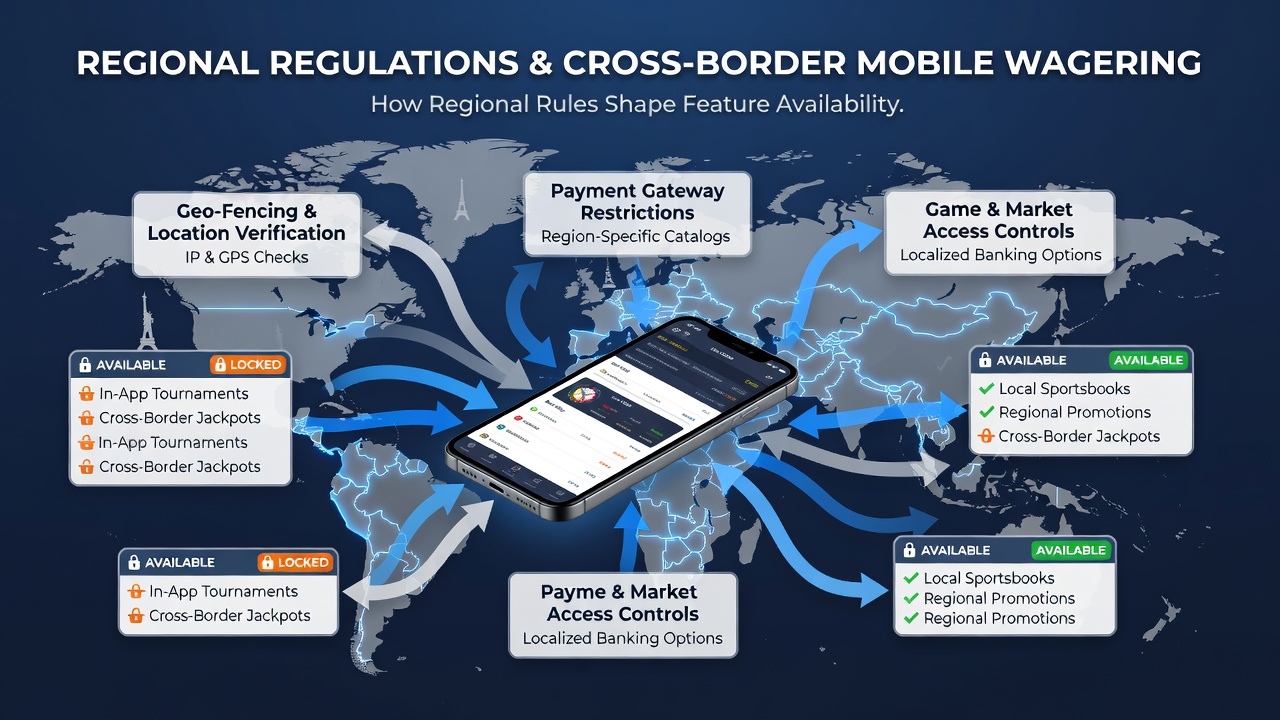
Withdrawal limits also vary, and some jurisdictions cap daily or monthly cashouts to align with anti-money laundering standards enforced by bodies like the Financial Transactions and Reports Analysis Centre of Canada. Those who study these patterns note that apps must maintain separate compliance layers for each market, which increases development costs and delays feature rollouts in newer regions.
Game Selection and Bonus Structures
Available games within apps depend on local content rules, and many regulators prohibit certain high-volatility slots or live casino streams that do not meet age-verification or fairness testing standards. Data from the European Gaming and Betting Association reveals that progressive jackpot features face additional scrutiny in several member states, leading operators to disable them for users in those areas. Bonus structures face similar constraints because advertising guidelines in places like Australia prohibit promotions that target vulnerable populations, which forces apps to customize offers by user profile and region.
One case involved a major platform that adjusted its free spin rewards after regulators in two provinces flagged them as potential inducements, and such adjustments demonstrate how quickly features can change when new interpretations of existing laws emerge. Observers note that cross-border users often encounter fragmented experiences where the same app offers full functionality in one country yet removes entire sections in another.
Emerging Trends Through August 2026
By August 2026 updates to prediction market rules in parts of the United States and Europe had begun to affect feature availability in mobile apps, and platforms responded by adding or removing certain event-based betting options accordingly. Industry groups such as the World Lottery Association track these shifts and report that operators increasingly rely on modular app designs to toggle features on and off without full updates. This approach allows quicker adaptation to regulatory changes while maintaining compliance across multiple territories.
Academic studies from research institutions including the University of Nevada, Las Vegas, highlight that such modular systems reduce legal risks but also limit innovation speed for global users. Those who analyze usage data find that players in restricted regions frequently switch between multiple apps to access desired features, which fragments market share among providers.
Conclusion
Regional regulations continue to dictate which features appear in cross-border mobile wagering apps, and this dynamic shapes user access in measurable ways across payment tools, game libraries, and promotional elements. Compliance requirements from diverse authorities drive operators toward flexible technical solutions that accommodate shifting rules without compromising legal standing. As frameworks evolve, the availability of specific functions remains tied to location-based verification and market-specific licensing, which keeps the landscape varied and segmented for participants worldwide.