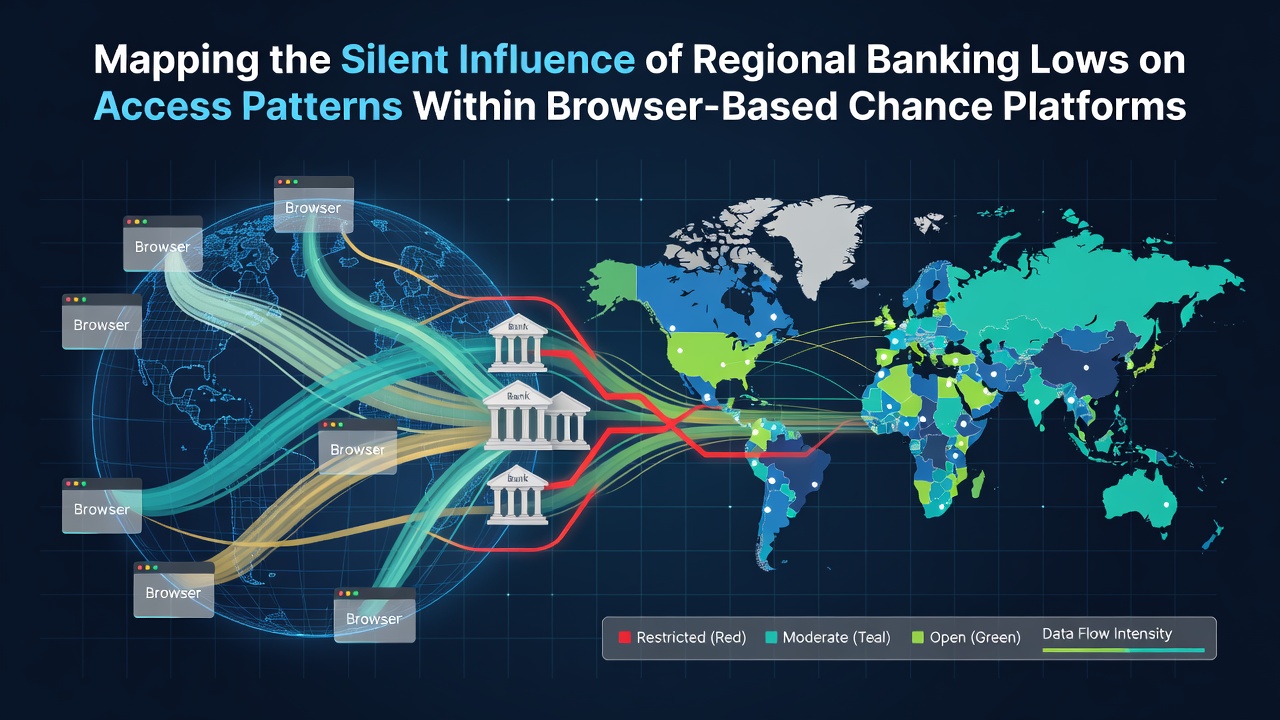
Mapping the Silent Influence of Regional Banking Laws on Access Patterns Within Browser-Based Chance Platforms
Regional banking laws create layered restrictions that directly shape how users reach and interact with browser-based chance platforms, and these rules often determine which payment rails remain available at any given moment. Financial institutions must comply with anti-money laundering statutes and consumer protection mandates that vary sharply by jurisdiction, which in turn forces platform operators to adjust supported deposit methods and withdrawal timelines on a country-by-country basis. Data from multiple regulatory filings shows that transaction approval rates fluctuate in direct correlation with the strictness of local banking oversight rather than with user demand alone.
How Payment Rails Respond to Jurisdiction-Specific Rules
Banking regulations in North America, Europe, and the Asia-Pacific region impose different thresholds for transaction monitoring, and these thresholds translate into distinct access patterns for players attempting deposits. In the United States, state-level banking rules intersect with federal guidelines from the Office of the Comptroller of the Currency, creating a patchwork where certain credit unions decline gambling-related transfers while others route them through intermediary processors. Observers note that August 2026 brought updated reporting requirements in several states that further narrowed the window for instant bank transfers on browser platforms.
Within the European Union, the revised Payment Services Directive requires strong customer authentication for every transaction above defined limits, and this requirement has prompted many operators to pre-screen user devices before allowing access to wallet funding screens. Australian financial institutions operate under rules administered by the Australian Securities and Investments Commission that mandate source-of-funds checks for recurring deposits, resulting in longer onboarding sequences for users in that market compared with neighboring jurisdictions. Researchers tracking these differences have documented measurable drops in repeat deposit attempts when authentication steps exceed three additional verification layers.
Observed Shifts in User Navigation and Platform Selection
Access patterns reveal that users migrate toward platforms offering the widest variety of local payment options once banking restrictions tighten in their region. Heatmap studies of browser sessions indicate increased navigation time spent on payment selection pages in markets where direct bank transfers face higher scrutiny, while time spent on game lobbies decreases proportionally. One analysis of session logs from mid-2026 found that platforms supporting regional e-wallets retained higher completion rates for first deposits even when overall traffic remained steady across borders.
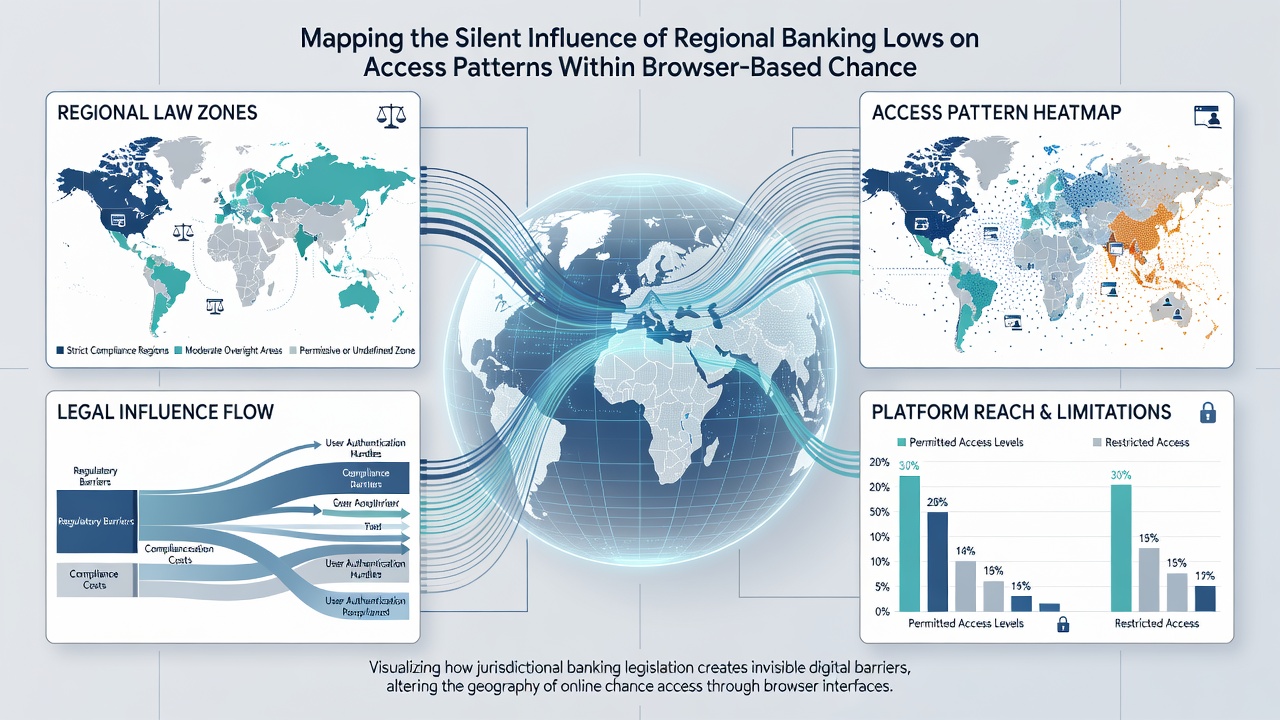
Those who monitor cross-border traffic patterns report that users frequently switch between desktop and mobile browsers when one interface encounters a blocked payment method, and this behavior intensifies in jurisdictions with recent updates to banking conduct codes. The Canadian Bankers Association has published guidance on fintech integrations that some platforms reference when deciding whether to maintain or retire certain regional processors, and similar documentation from the Monetary Authority of Singapore outlines parallel considerations for Southeast Asian markets.
Technical Adaptations on Browser Platforms
Platform developers respond to these constraints by embedding region-aware logic that detects user location at the payment gateway stage and then surfaces compliant funding methods only. This conditional display reduces failed transaction attempts yet also creates visible differences in the visible interface depending on the visitor's IP-derived jurisdiction. Evidence from industry reports shows that such adaptations correlate with sustained user retention in tightly regulated markets, whereas platforms that maintain static payment lists experience higher bounce rates at the deposit step.
August 2026 data from several payment processors highlighted seasonal spikes in alternative funding method usage following the implementation of new transaction caps in selected European banking markets. These shifts occurred without corresponding changes in overall gambling participation rates, suggesting that users simply reroute existing activity through whatever channels remain open under current rules.
Conclusion
Regional banking laws continue to function as silent gatekeepers that determine which browser-based chance platforms remain practically accessible to users in any given location. The resulting access patterns reflect ongoing adjustments by both financial institutions and platform operators as they align with evolving compliance obligations across multiple jurisdictions. Continued monitoring of transaction success rates and navigation flows will likely reveal further refinements in how these rules influence everyday user behavior on browser interfaces.